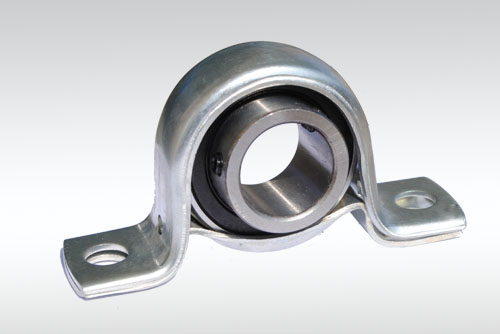
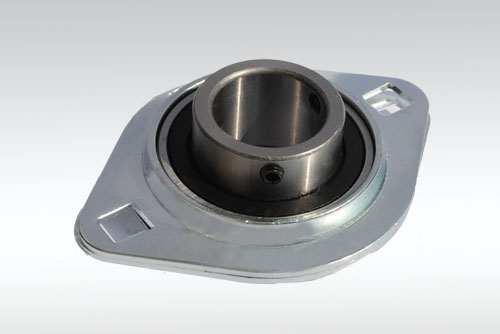
Linear bearing
Linear bearing is a linear Motor system, which is used in combination with cylindrical shaft for linear travel. Due to the contact between the load-bearing ball and the outer sleeve of the bearing, the steel ball rolls with minimal frictional resistance. Therefore, linear bearings have low friction, are relatively stable, do not change with the bearing speed, and can achieve stable linear motion with high sensitivity and accuracy. The consumption of linear bearings also has its limitations, mainly due to their poor impact load capacity and load-bearing capacity. Secondly, linear bearings exhibit significant vibration and noise during high-speed motion. Linear bearings are widely used as sliding components in industrial machinery such as precision machine tools, textile machinery, food packaging machinery, printing machinery, etc.
Linear bearing structure
Linear bearings have multiple ball circuits. When the linear bearing moves inside the linear bearing, the ball rolls along the linear axis in the raceway. Each raceway has a return groove for ball circulation, forming a closed circuit that circulates the ball. There are three basic structural forms of linear bearings.
1.1 Standards
The outer surface of standard linear bearings is a high-precision cylindrical surface and has a high coaxiality with linear bearings. They can be directly installed and used inside the bearing, and both ends are fixed with retaining rings or glands. Installation is simple, convenient, and has a wide range of applications.
1.2 Gap type
The clearance type bearing has the same size as the standard type bearing. When the outer sleeve has an axial groove, it can be installed on a bearing seat with an adjustable inner diameter, making it easy to adjust the clearance between the bearing and the shaft. This type of bearing can obtain very small radial clearance through adjustment, thus ensuring a high radial working progress of the bearing.
1.3 Opening type
The outer ring of an open end bearing has an opening equivalent to the width of a row of steel ball circuits. This type of bearing can be used in situations where the shaft is already fixed on a support rod or support to prevent shaft bending. The clearance of this type of bearing is also easy to adjust. When the linear shaft is long and the load is small, the use of open type bearings not only solves the problem of easy bending of linear bearings, but also makes the structure lightweight, compact, and cost-effective.
The structural principle of linear bearings
There are many types of support structures for linear motion bearings. According to the structure and types of rolling elements of linear motion rolling bearings, they are divided into linear motion ball bearings, linear motion roller bearings, linear motion ball guide rail supports, linear motion roller guide rail supports, and linear motion needle roller guide rail supports.
Working principle of linear bearings
Due to the contact between points and axes in the construction of linear bearings, the contact operation between steel balls and the linear optical axis forms its low friction, low resistance, and high-precision operation effect, which can also rotate. Therefore, linear bearings are widely used in precision equipment such as electronic equipment and tensile testing machines, as well as sliding components of industrial machinery such as multi axis machine tools, punches, tool grinders, automatic gas cutting machines, printers, card sorting machines, food packaging machines, etc. The structure of a linear motion ball bearing consists of an outer sleeve 3, a cage 1, a steel ball, and a retaining ring 4. When the outer sleeve 3 moves along the axis direction, use the retaining frame 1 fixed on it to push the steel ball directly to roll on the guide shaft 5. Steel ball 2 is densely distributed in cage 1 and can rotate and roll in cage 1.
Characteristics of linear bearings
Linear bearings are used for quenching linear transmission


 语言/Language